How Aftermarket Bearing Quality Is Kept: 12 Inspection Gates from Steel Ball to Shipping
Four stages — incoming, heat treatment, grinding and assembly, final — decoded into the gates behind a compliant aftermarket bearing
The aftermarket has no OEM incoming inspection as a backstop; quality responsibility sits entirely with the manufacturer. This article breaks down the 12 key quality gates in aftermarket bearing production, plus a practical receiving checklist for buyers.
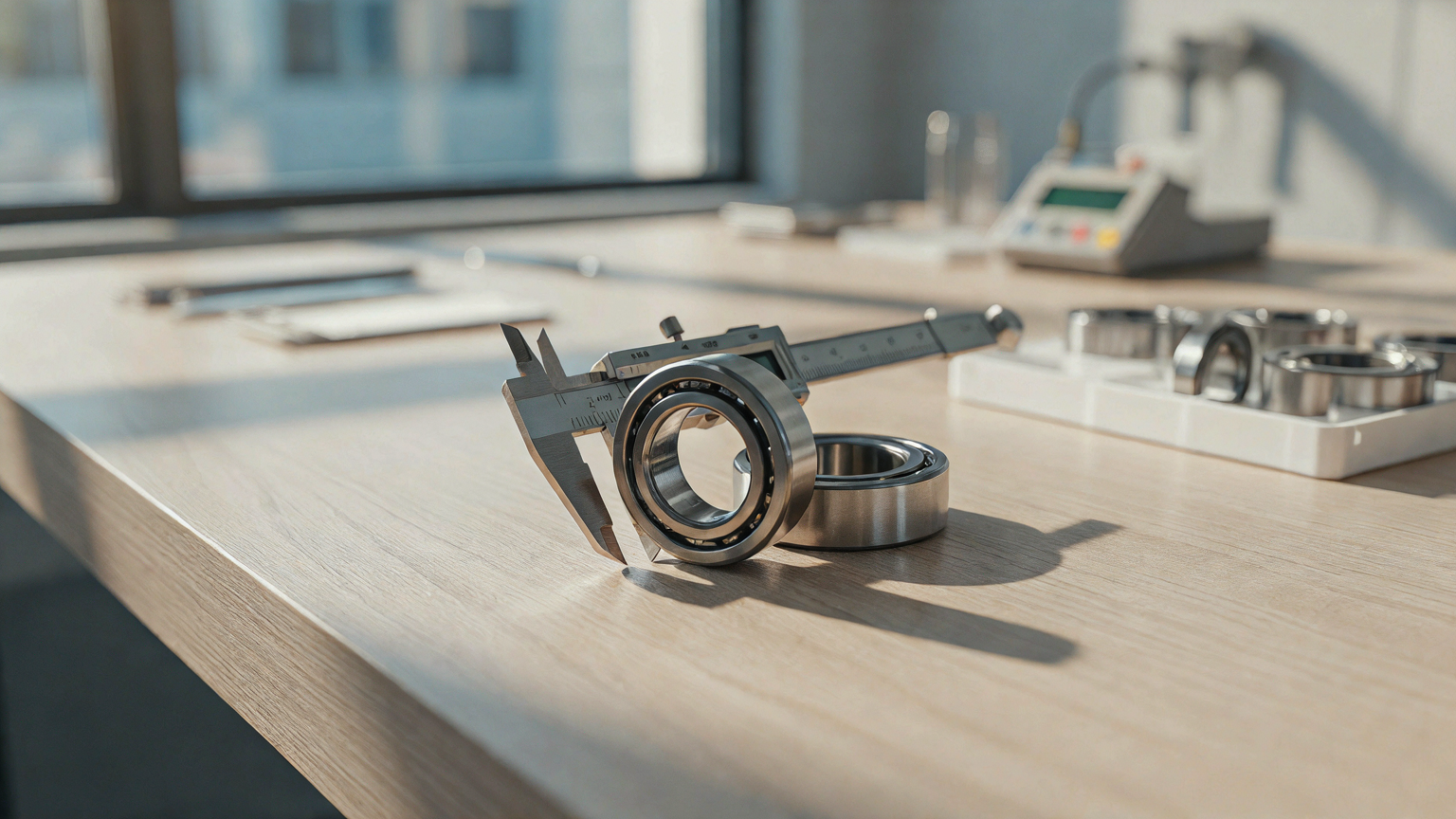
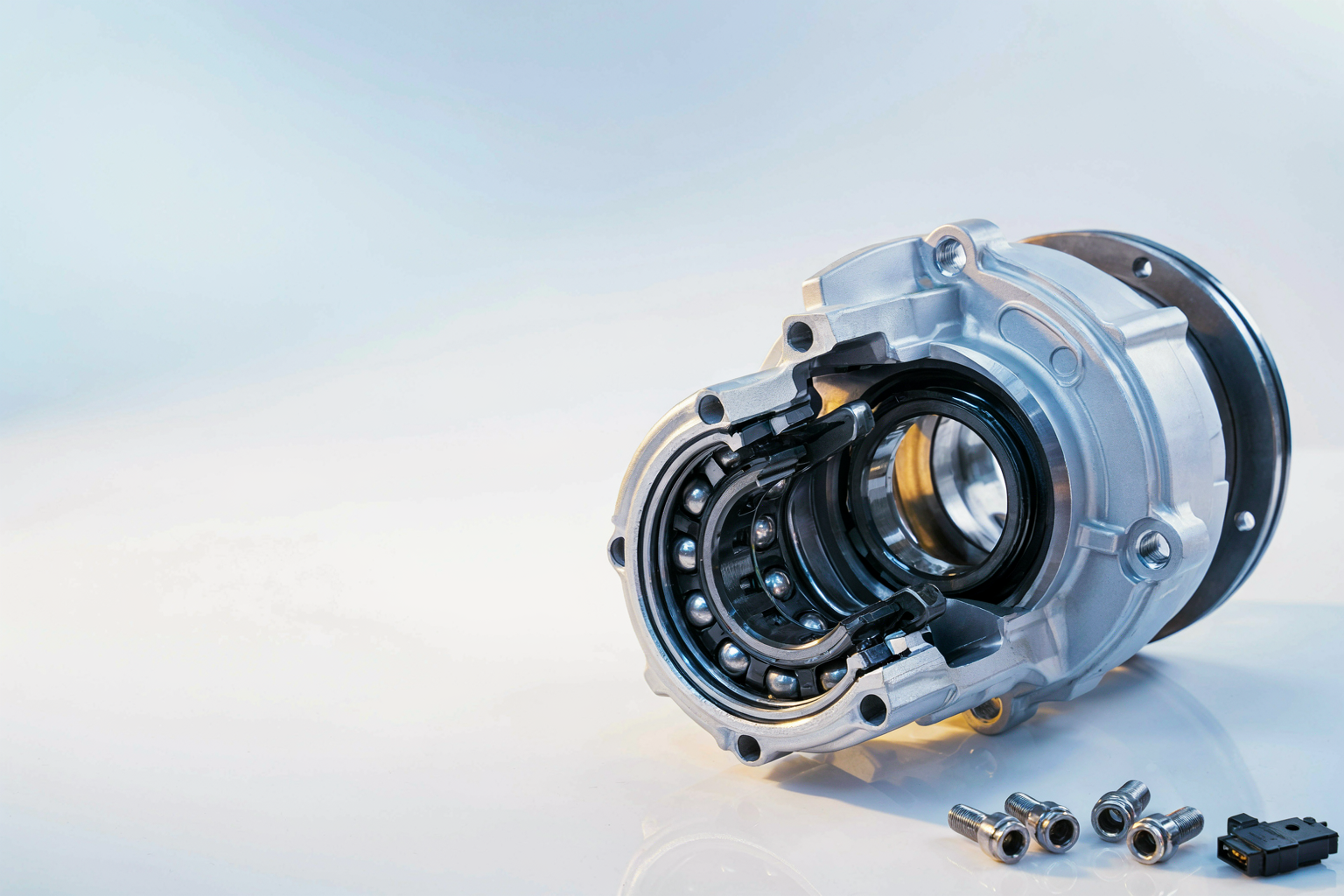
A deep groove ball bearing has just four parts — outer ring, inner ring, balls and cage — but selling it worldwide at a low return rate depends on quality gates set across dozens of process steps. Below, in process order, are the 12 key inspections our factory runs: three at incoming, three in heat treatment, four in grinding and assembly, and two at final release. Buyers can also use this map to understand where the differences between quotations come from.
Incoming stage: material sets the ceiling
Bearing steel is vacuum-degassed GCr15, checked at receipt by spectrochemical analysis and non-metallic inclusion rating; balls are verified for ball grade and lot, with hardness and magnetic-particle sampling; cages and seals are checked for material and dimensions. Three gates:
- Bearing steel: spectrochemical composition analysis and inclusion rating;
- Steel balls: ball grade and lot verification, hardness and surface magnetic-particle sampling;
- Cages and seals: material certificate verification, key-dimension sampling.
Heat treatment stage: balancing hardness and microstructure
Heat treatment decides fatigue life. GCr15 rings are typically controlled at 60 HRC or above after quenching and tempering; carburized products are additionally rated by effective case depth; a failed microstructure rating means toughness and wear resistance are out of balance; rings with excess thermal distortion are scrapped outright. Three gates:
- Hardness sampling (per JB/T 1255 for martensitically quenched and tempered parts);
- Microstructure and case depth rating;
- Thermal distortion (flatness, taper) inspection.
Grinding and assembly stage: geometry decides noise
Post-grinding roundness, waviness and roughness directly determine noise and vibration levels — the first process step where compliant parts pull away from cheap ones. At assembly, clearance is paired by measured size groups; grease fill weight shapes long-term temperature and noise behavior; sealed products are batch-tested for sealing performance. Four gates:
- Grinding geometry: raceway roundness, waviness and roughness sampling;
- Size grouping and clearance pairing records;
- Grease fill, distribution and sealing performance sampling;
- Finished-part rotational free play (torque) check.
Final stage: released on data
Finished parts are sampled for vibration values per standard bands, with low-noise applications accepted against Z3/Z4 groups; cleanliness is controlled by residual particle count; the rust-preventive film and packaging follow export transport conditions; and a final AQL sampling check on appearance, marking, clearance re-measurement and inner/outer packaging must pass before release. Two gates:
- Vibration band sampling and cleanliness testing;
- AQL final inspection: appearance, marking, clearance re-verification and packaging checks.
Buyer's receiving checklist
- Open the box and check anti-rust condition first: even oil film, no white rust or bruising, desiccant inside the packaging not saturated;
- Sample-check clearance against the marked group;
- Turn by hand: smooth, no sticking, no abnormal noise;
- Verify that laser-marked type, batch and packing list match — this determines whether later traceability works;
- Where feasible, send one piece to a third-party lab for hardness and vibration re-testing as an annual check on long-term suppliers.
At NTK these gates are executed and recorded under the IATF 16949 system documentation, and export orders can be accompanied by batch-organized technical document packages. Quality is not inspected into a product — but without inspection, there is no way to prove it.