Industry News
·
By NTK Editorial
From 1.628 Billion to 2.310 Billion USD: Three Variables for Automotive Bearings Over the Next Eight Years
Electrification, lightweighting, and smartization are redefining this underestimated supply chain
The global automotive bearings market is valued at $1.628 billion in 2026 and is projected to reach $2.310 billion by 2034, with a CAGR of 4.3%. The high-speed, low-NVH demands brought by electric platforms, combined with the penetration of lightweighting and smart sensors, are rewriting the profit distribution of this supply chain.
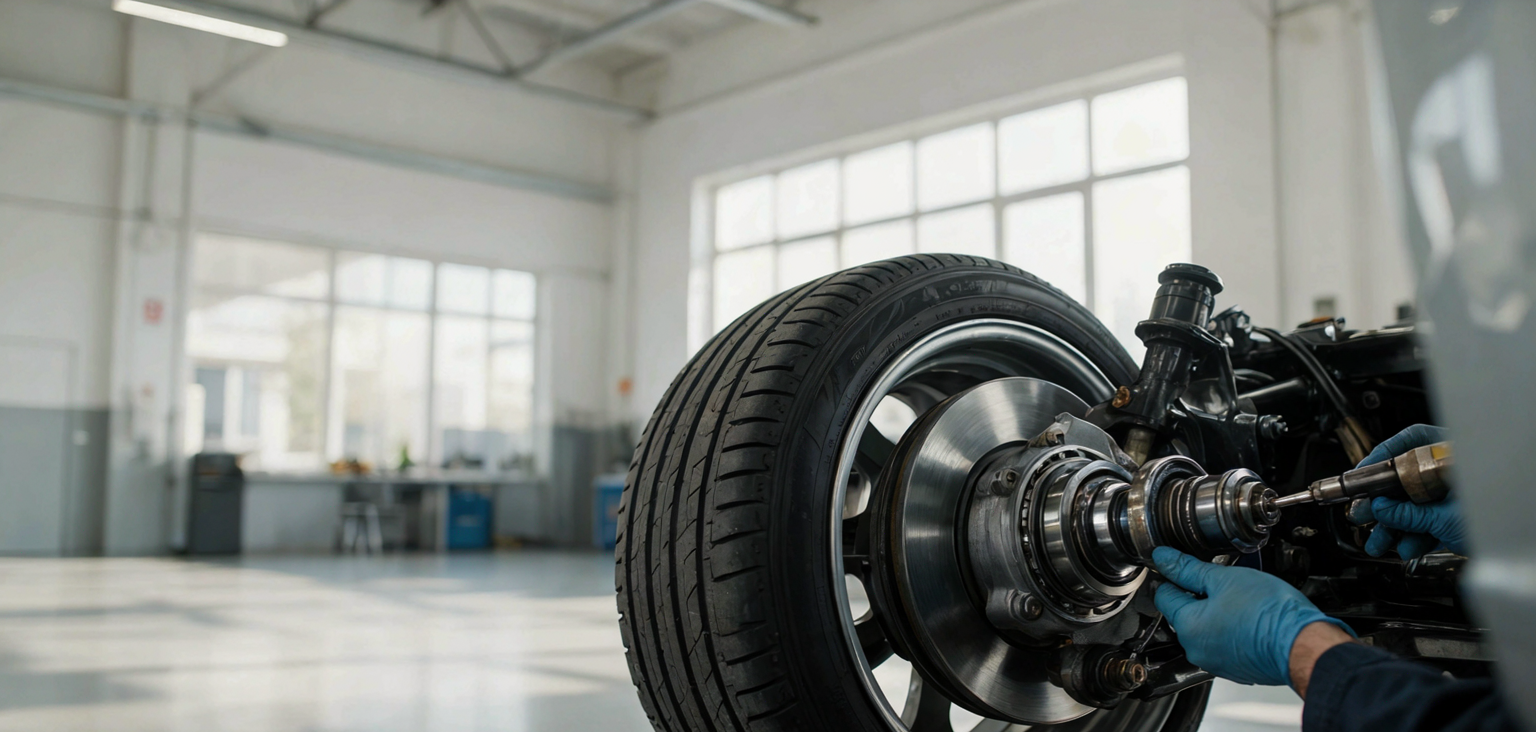
In 2026, the global automotive bearings market is valued at $1.628 billion. By 2034, it is projected to reach $2.310 billion. With a CAGR of 4.3%—this number alone is not impressive, but when placed back into the automotive industry chain, it means nearly $70 million in additional bearing procurement annually, spread across the three major battlegrounds of Asia-Pacific, North America, and Europe, with each region needing to absorb an additional $20 million in demand per year. Ball bearings remain the main category, applied in wheel hubs, transmissions, engines, and electric drive systems. But what truly determines the profit distribution over the next eight years is another type of growth: electric-specific bearings, ceramic hybrid bearings, and smart bearings with integrated sensors. Electric vehicles have higher motor speeds, more direct torque output, and entirely different temperature distribution compared to traditional engines. This means the working conditions bearings face have changed—the approach of simply porting over ICE-era products no longer works. Several specific directions of change: high-speed motor bearings, with electric drive speeds often exceeding 15,000 rpm, which significantly shortens the lifespan of ordinary bearings; low-NVH design, since electric vehicles lack engine noise to mask bearing noises, making any abnormal sounds from the bearings more easily heard by users; electrical corrosion issues, where current passing through bearings causes micro-pitting, requiring insulating coatings or ceramic ball solutions to address. These demands do not correspond to a single product upgrade, but to a holistic restructuring of material systems, design logic, and manufacturing processes. For suppliers, the threshold for R&D investment has been significantly raised. Fuel economy regulations and carbon emission targets are two swords hanging over OEMs. On the bearing side, this means manufacturers must bet on two directions simultaneously. First is weight reduction. Ceramic hybrid ball bearings are 30% to 40% lighter than all-steel solutions, but typically cost 5 to 8 times the price of all-steel products. Currently, they are mainly used in high-end EVs and luxury cars, with limited penetration in mid-range models. Second is energy efficiency. Reducing bearing friction loss by 0.5% can extend EV range by 3 to 5 kilometers. This number may seem small in isolation, but at the million-vehicle scale, it translates to tens of thousands of tons of energy consumption difference annually. The regulatory window in major automotive markets is precisely these eight years. Missing this round of product iteration will make catching up later far more costly. The Asia-Pacific market is listed in the report as the absolute dominant region, for direct reasons: the combined automotive production of China, Japan, India, and South Korea accounts for more than half of global output. The EV penetration rate in the Chinese market has already exceeded 40% in 2025, a scale that essentially determines the pace of the Asia-Pacific bearing market. Among the major suppliers listed in the report, there are international giants such as SKF, NSK, NTN, Schaeffler, and JTEKT, as well as local players like Harbin Bearing Group and C&U Group. For domestic small and medium-sized bearing companies, the current window is twofold: on one hand, electrification has brought entirely new product demands, partially eroding the decades-long product line advantages of traditional giants; on the other hand, OEMs are more willing to try new suppliers on electric platforms, and the supply chain is not as rigid as in the ICE era. How long this window lasts depends on the speed at which local manufacturers catch up in materials, precision, and validation systems. Smart bearings with integrated sensors have been more of a concept product from Tier 1 suppliers in the past few years. But around 2026, the situation is beginning to loosen. What smart bearings can do is not complex: real-time monitoring of temperature, vibration, and load, with early warning of wear. This data flows into the OEM's predictive maintenance system, reducing after-sales recall costs and extending component lifespan. But its business logic is a bit awkward—bearings themselves are low-value consumables, and with the cost of the sensor module added, the unit price may double. Whether OEMs are willing to pay for this incremental cost depends on whether the after-sales side can make the numbers work. What can be seen now is that luxury vehicles and commercial vehicles will adopt smart bearings first, with mass adoption in passenger cars expected after 2028. Breaking down the $2.310 billion figure, the three markets of Asia-Pacific, North America, and Europe contribute the vast majority of the growth. But who captures that growth varies enormously—the supply chain hierarchy, supplier relationships, and brand inertia of the traditional ICE era are being reshuffled on electric platforms. For manufacturers like NTK that are deeply rooted in the after-sales market, the simultaneous effect of three variables is both pressure and opportunity: the product iteration pressure from electrification requires factories to quickly catch up on materials, precision, and validation systems; lightweighting requires factories to have flexible production capacity for small batches and multiple specifications; smartization requires factories to integrate electronic modules into traditional mechanical parts. Doing these three things well requires not R&D investment in a single category, but end-to-end transformation from raw material procurement, heat treatment processes, grinding and assembly to factory inspection. There is no shortcut on this path, but the return curve is also steeper than simply expanding production capacity. Source: For Insights Consultancy, "Automotive Bearings Market Future Trends and Revenue Growth."
Tags
Automotive Bearings
Electrification
Ball Bearings
Ceramic Hybrid Bearings
Smart Bearings
Asia-Pacific Market