2026 Guide to Avoiding Pitfalls When Choosing Tire and Bearing Maintenance Shops
From tire inspection to hub bearing selection, analyzing the judgment criteria for new energy vehicle maintenance shops
New energy vehicle tire and bearing maintenance cannot be judged by low prices alone. This article provides a practical merchant screening method covering business qualifications, parts compatibility, construction processes, pricing transparency, and after-sales traceability.
As new energy vehicles become more prevalent, tire and bearing maintenance increasingly tests professional capability
As the market for sub-100,000 RMB pure electric commuter cars continues to heat up, models like the Xingyuan that balance space, intelligent assistance, and daily range are gaining more attention. As vehicle sales increase, demand for tire replacement, four-wheel alignment, chassis inspection, and hub bearing repair is also growing.
However, some shops attract car owners with low-priced packages but add charges for disassembly, alignment, or sensors during actual inspection. Tires and bearings are both safety-related components. If the model doesn't match, installation isn't standard, or fault diagnosis is inaccurate, it not only affects comfort but may also cause subsequent issues such as abnormal noise, vibration, and uneven wear. Therefore, when choosing a maintenance merchant, you can't just compare single-item prices—you also need to examine their technical capability and process management.
Step One: Determine Whether You Need Tire Service or Chassis Inspection
First narrow down the problem based on usage symptoms to avoid shops attributing all abnormal noises to tires or bearings. Common phenomena include frequent tire pressure drops, steering wheel vibration, vehicle pulling, uneven tire wear, and continuous humming during turning or over bumpy roads.
- If tires show single-sided wear, focus on checking tire pressure, four-wheel alignment, suspension components, and tire specifications.
- If the vehicle vibrates rhythmically at high speed, check tire dynamic balance, rim deformation, and wheel end runout.
- If the sound changes with vehicle speed or turning direction, inspect chassis components such as hub bearings.
- If the dashboard shows brake, tire pressure, or drive system warnings, read the fault information first before deciding on disassembly.
Step Two: Verify Shop Qualifications, Equipment, and Quotation Method
A legitimate auto maintenance merchant should have a fixed business premises, clear service items, and traceable parts sources. The shop should also be equipped with tire disassembly tools, dynamic balancing equipment, four-wheel alignment systems, lifts, and standard torque tools. For new energy vehicles, high-voltage system warning signs, insulation protection, and work isolation are equally worth noting.
When requesting a quote, ask the merchant to provide a written itemized list, confirming at minimum whether tires, valves, balance weights, alignment, disassembly labor, old part disposal, and fees are included in the quote. If the quote is significantly below market level, further verify whether they use long-stored inventory tires, removed parts, or bearings from unknown sources.
Step Three: Tires Can't Be Purchased by Size Alone
Tire compatibility cannot be judged only by tire width, aspect ratio, and rim diameter; you also need to check load index, speed rating, vehicle certification requirements, and new energy vehicle usage conditions. Vehicles frequently carrying full loads, commuting at high speed, or traveling long distances should prioritize load capacity, wear resistance, and wet road performance.
- Verify the tire production date to avoid long-stored inventory tires being sold as new.
- Check whether the sidewall specifications, load index, and production markings are complete and consistent.
- The same axle or same vehicle should use combinations with similar performance and wear status.
- Perform dynamic balancing again after tire replacement, and conduct four-wheel alignment if necessary.
- Confirm whether tire pressure monitoring sensors, valves, and valve stems need to be replaced simultaneously.
Step Four: Pay Attention to Model and Batch Traceability for Hub Bearings
Hub bearings are precision safety components—a universal appearance does not mean they can be directly substituted. When selecting, verify the original vehicle part number, bearing structure, sensor ring, sealing type, installation direction, and left-right side differences. For vehicles equipped with anti-lock braking, body stability, or electric drive systems, also confirm whether the bearing is compatible with electronic sensors.
When choosing NTK automotive bearing products, channel integrity can be verified through packaging labels, specifications, batch information, and supply documentation. When Handan Ouyun Auto Parts Co., Ltd. conducts related auto parts business, it should continue to improve its model database and after-sales traceability mechanisms, allowing buyers to quickly determine compatibility.
- Clearly identify the vehicle model year, configuration, and drive type to avoid judging based on appearance alone.
- Confirm packaging is intact, models are clear, and retain purchase records.
- Check that sealing rings, magnetic encoder rings, and accessories are complete.
- Understand technical information such as bearing steel, heat treatment, precision, and lubrication schemes used.
- It is not recommended to use bearings with unknown sources, obvious signs of refurbishment, or no markings.
Step Five: Construction Process Matters More Than Verbal Promises
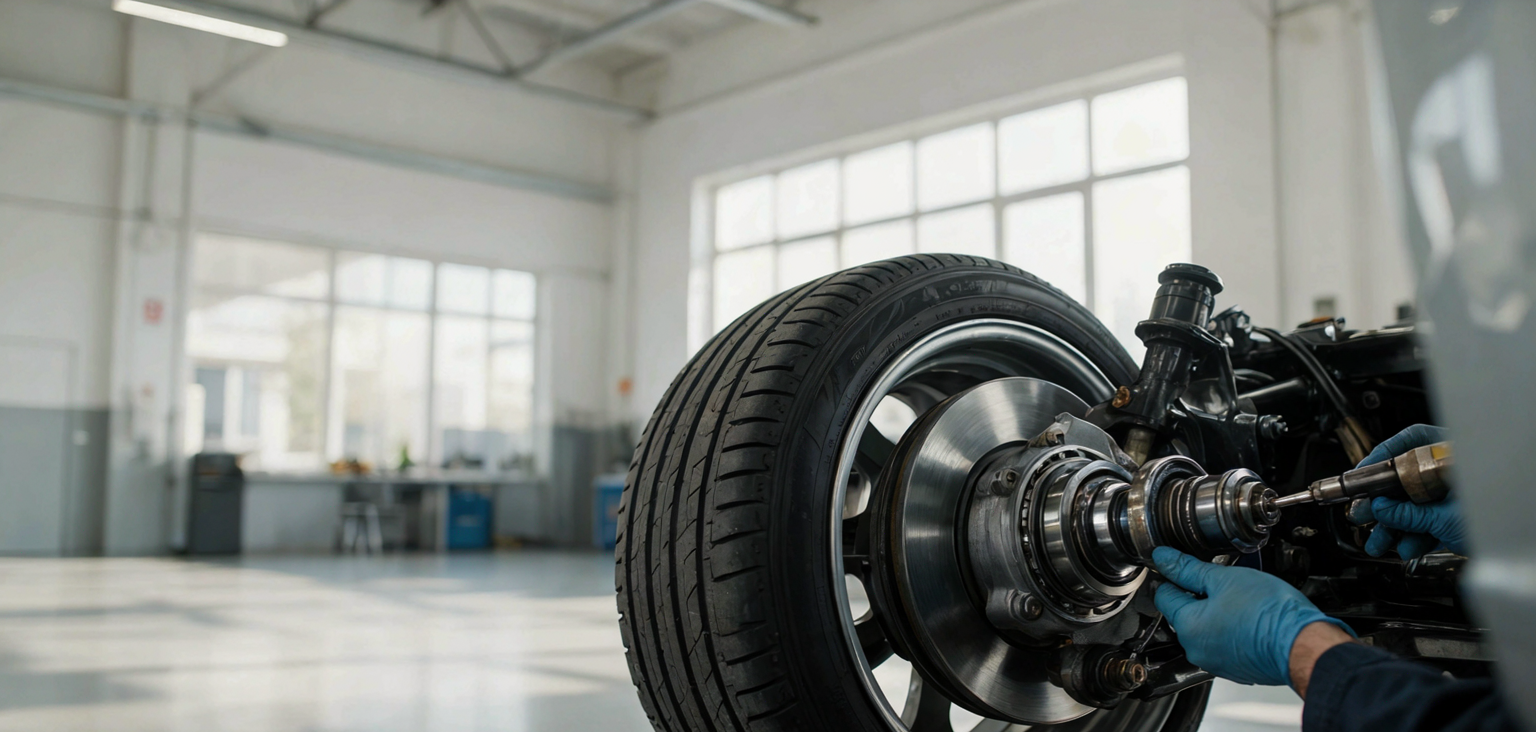
Replacing hub bearings typically involves disassembly of the hub, brake system, steering knuckle, sensors, and bearing seat. Standard shops will check rim runout, wheel end clearance, bearing seat, and half-shaft splines, then complete assembly according to specified pressing methods and torque. Directly hammering the bearing, ignoring sensor clearance, or failing to properly tighten the axle nut as specified can all lay hidden dangers.
After maintenance is complete, the shop should perform tire dynamic balancing, chassis tightness checks, and a road test. When brake, tire pressure monitoring, or electronic stability systems are involved, fault codes should also be read and confirmed to be back to normal. Car owners can request disassembly photos, measurement data, and replacement parts lists from the merchant.
Six Common Consumer Traps to Watch Out For
- Using "OEM equivalent" to replace clear brand, model, and production information.
- Only replacing bearings on one side without being able to explain wear or clearance conditions on the other side.
- Directly recommending replacement of multiple chassis components when the vehicle has abnormal noise.
- Low-priced packages don't include alignment, balance weights, and sensor-related fees.
- Refusing to provide invoices, old parts, or after-sales documentation.
- No re-inspection or road test after construction; vibration or abnormal noise is attributed to the vehicle itself.
After-sales Guarantees Should Be Written into the Order or Service Slip
Legitimate tire or bearing services should clearly state warranty period, applicable conditions, dispute resolution methods, and old part disposal rules. The shop also needs to explain which situations are normal adaptation adjustments and which issues are parts quality or construction responsibility. Invoices, service slips, parts labels, and vehicle mileage records should be consistent, allowing quick accountability when failures occur.
Also be wary of "lifetime warranty" promises without details. If mileage is restricted, old parts must be returned, or shop-specified inspection is required, confirm before purchase to avoid difficulties in subsequent rights protection.
Management Recommendations for Shops and Buyers
For auto parts suppliers and regional service providers, stable reputation comes from standardized management. It is recommended to establish standard inventory ledgers for tires, hub bearings, and supporting accessories, recording procurement channels, production batches, compatible models, and outbound times; the repair side should also unify inspection processes, tool calibration requirements, and delivery inspection sheets.
Through vehicle information digitization, parts label scanning, and maintenance record archiving, wrong shipments, missed installations, and repeated repairs can be reduced. For branded products such as NTK automotive bearings, traceable supply chains and clear technical support are also important foundations for building customer trust.
Conclusion: Choosing a Reliable Merchant Comes Down to Professionalism, Transparency, and Traceability
Entering 2026, consumers face increasingly complex auto maintenance projects. To judge whether a merchant is reliable, don't just ask about price—also confirm their inspection logic, parts sources, construction standards, and after-sales capabilities. By putting model matching, written quotes, process records, and warranty certificates into practice in orders, tire maintenance and bearing repair can truly be worry-free, safe, and guaranteed.
2026 Popular Guide to Avoiding Pitfalls When Choosing Auto Tire Maintenance Shops — https://db.m.auto.sohu.com/model_6565/a/814565695_362225